When Clothes Became Ready-to-Wear
When clothes became ready-to-wear, standard sizes changed how garments were made and fitted. Learn why this shift spread unevenly and what it changed.
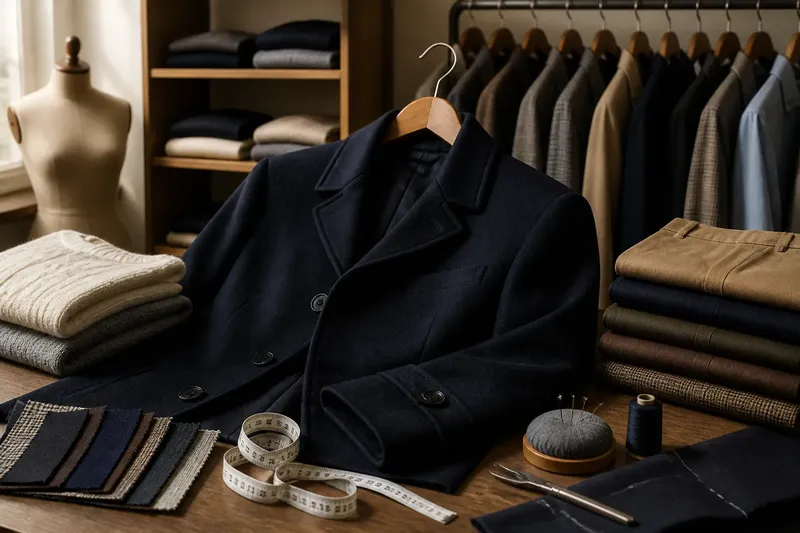
When clothes became ready-to-wear, a coat could be finished before its eventual owner entered the shop. That change depended on more than sewing machines: reusable patterns, repeatable construction and shops able to hold finished stock all helped move clothing from individual commission towards sale in standard sizes.
Clothes for a wearer
Before ready-made garments became broadly available, clothing might be made at home, commissioned from a tailor or dressmaker, or altered from an existing garment. These routes differed in cost and skill, but often allowed measurements, fabric and fit to be considered together for a particular person or household.
That did not mean every wearer had a perfect fit or an extensive bespoke wardrobe. Many people owned few clothes, sewed for themselves, passed garments between relatives or relied on local makers working within limited means. Custom fitting was a method, not a promise of luxury.
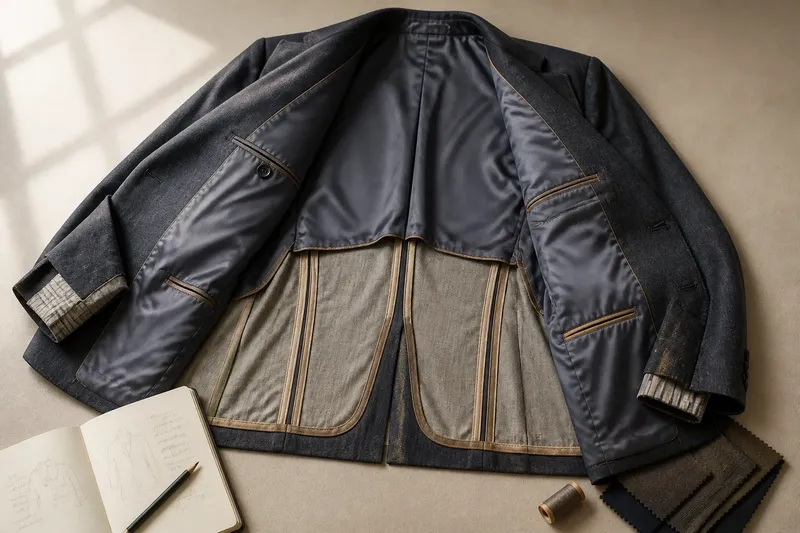
Garments could also be let out, taken in, patched, recut or handed down. Their relationship to a wearer was not settled at purchase; clothing might change as bodies, budgets and uses changed.
Production before purchase
Ready-to-wear depended on making garments before a particular buyer appeared. Repeated production called for patterns that could be reused, supplies of cloth and trims, and a way to sort finished garments into sizes or other categories.
This development was gradual and uneven, not a single invention that displaced skilled making. The historical picture varied by garment and market. Work clothes, uniforms and simpler garments could be made in standard forms more readily than pieces requiring extensive fitting or decoration. Local makers continued alongside factories and shops.
Mechanised sewing made repeated assembly more practical, but machinery alone did not create a ready-made market. Retailers had to receive and display finished garments; customers needed a place to inspect them and choose among available options. Production and retail thus became linked parts of the same system.
Sizes and compromises
Standard sizing turned variation among bodies into a sorting problem for makers. Rather than prepare a unique pattern for every buyer, they grouped garments into ranges intended to fit many people. The approach made finished stock easier to offer, but could not account equally well for every body.
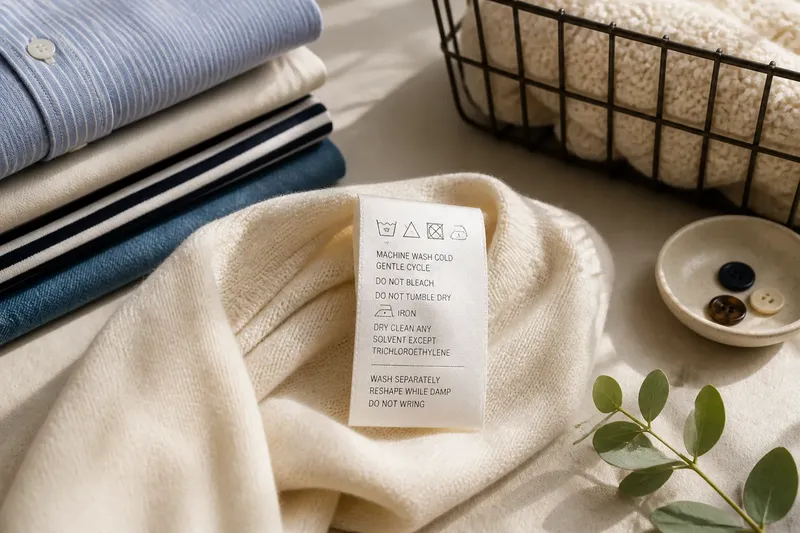
A size label is not a direct description of a person. It reflects decisions about proportions, ease and grading: how a pattern changes across sizes. Those conventions can vary by maker, garment and intended silhouette. The label simplifies a choice while leaving its assumptions unstated.
Fitting therefore became a decision made partly by the wearer. A shopper might try another size, choose the better fit at the shoulders or waist, and accept a looser fit elsewhere. Alterations remained possible, but were no longer built into every purchase.
Choice at the shop
Buying a finished garment offered a practical advantage: a customer could see its colour, feel its cloth and judge its silhouette before paying. Yet choice was limited to what had already been made and delivered. Personal preference operated within that stock rather than directing a garment’s creation from the outset.
Say you need a dark coat for regular travel and find one that sits comfortably across the shoulders but hangs loosely at the waist. You compare another size and find that its shoulders are too broad; a different cut is unavailable. An alteration service says the waist can be adjusted, so you weigh that extra work against keeping the looser fit. The result is a decision based on the coat in front of you, not a commission built around your measurements.
What changed for whom
Ready-to-wear made finished garments available through shops, but it did not make clothing uniform in every sense. Income, occupation, regional taste and access to retail continued to shape what people wore. Standard sizing made garments easier to reproduce; it did not make bodies easier to classify.
The shift also gave different participants distinct roles. Pattern makers and manufacturers planned for repeatable production; retailers selected stock; wearers assessed fit and might seek alterations afterwards. Tailoring, dressmaking and home sewing continued, but finished clothing became another route to a wardrobe rather than the result of a personal commission.
A coat could begin as one of many similar pieces and become individual through wear, repair and alteration. A darn or a replacement button might record a wearer’s choices more clearly than the original cut.
Ready-to-wear questions?
What does ready-to-wear mean?
Ready-to-wear describes clothing made in standardised sizes before an individual customer buys it. It contrasts with garments made or substantially fitted for a particular wearer.
Is ready-to-wear the same as mass production?
The terms overlap, but describe different things: ready-to-wear concerns when a garment is made and for whom, while mass production describes a manufacturing method and scale. A ready-made garment need not be produced on the same scale as factory clothing.
Why can the same size label fit differently?
Labels reflect each maker’s pattern and grading choices, not one universal set of body proportions. A relaxed coat and a fitted dress, or garments from different makers, can therefore fit differently under the same label.
Did custom clothing disappear?
No. Tailoring, dressmaking, home sewing and alterations continued, though their place in everyday wardrobes changed. Ready-to-wear expanded the option of buying a finished garment rather than eliminating other ways of getting dressed.
Reading the garment
A fixed size range, a repeated cut and a display of finished pieces all point to production taking place before the wearer enters the picture. An alteration shows where a particular body asks the garment to change.
When clothes became ready-to-wear, the relationship between wearer and maker became less direct and more distributed across pattern makers, manufacturers, retailers and alteration workers. A size label can be useful without being definitive; fit remains a negotiation, even when the garment has already been made.